
We prepare the organizations for the emerging landscape of human rights due diligence and make the businesses future ready to conduct it responsibly and easily navigate the rising HRDD domain
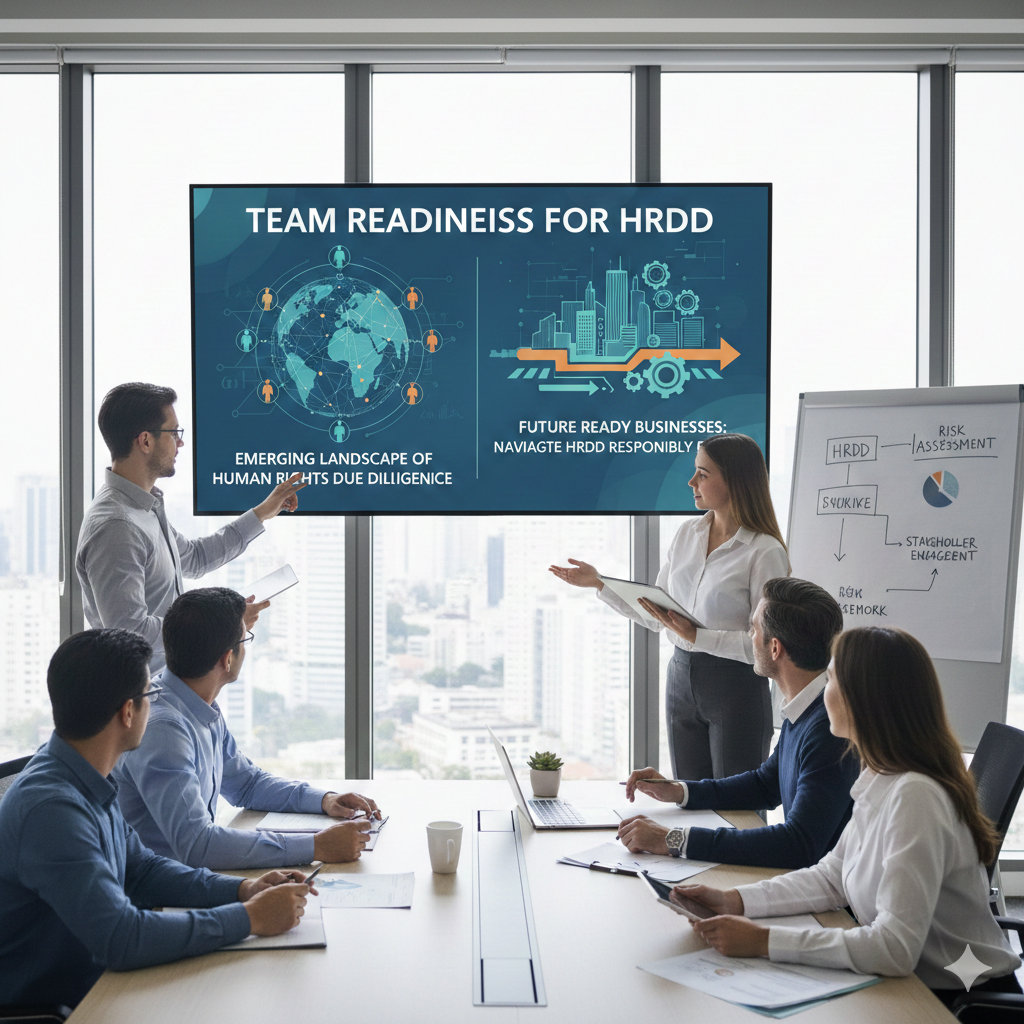
Human Rights Due Diligence (HRDD) laws have shifted responsible sourcing beyond audit-led compliance, now HRDD demands deeper engagement with suppliers to address root causes of risk, strengthen systems, and enable sustainable prevention and remedy. Due diligence teams must take charge on the underlying causes of risk, promote the creation of sustainable systems, avoid harm, facilitate access to remedies, and show ongoing progress throughout their supply chains.
But the challenge is that although being expected to work as change agents under HRDD, the due diligence team is still primarily trained, rewarded, and evaluated as compliance managers. Teams turn to transactional, audit-driven procedures when they are limited by know-how of facilitation, or unable to manage external project teams when experience and skills of project management is focused only on outputs and not outcomes. This results in repetitive findings, temporary solutions, and supplier fatigue.
We work with brand teams, do some handholding, coach them and build their capacity to understand and fit in their role as a change agent. So that they can effectively identify underlying issues, find practical solutions and facilitate change in collaboration with the suppliers.
iMentor addressed the challenge through a role transition project for one of its client’s due diligence teams to move from audit-focused approach to developmental, project-based work with suppliers.
The project recognised that this shift in role needs more than training, it requires a change in mindset, confidence, and real-world experience. The project began with a needs assessment to understand the team’s strengths and gaps, followed by a shared understanding of HRDD laws and supplier compliance systems based on the HRDD framework and OECD guidelines. For experiential learning purposes, a deep dive and assessment of the grievance management system of suppliers was taken as a base to make the teams move beyond mere audit-led compliance. The due diligence teams were made to work with one or two suppliers, including assessing existing systems, identifying gaps, co-creating improvements with suppliers and workers, and supporting early implementation. Along the way, participants were also able to build practical skills in project management, facilitation, problem-solving, and collaborative supplier engagement through group learning and peer exchange.

iMentor Development Services is a responsible business consulting firm working on structural challenges in global supply chains through practical, ethical, and implementable solutions.
© Copyright 2026, All Rights Reserved by