
The investigations and systems assessments demand a higher level competency and know-how, which goes deeper into the interplay of teams, SOPs, stakeholders and impact on the workers.
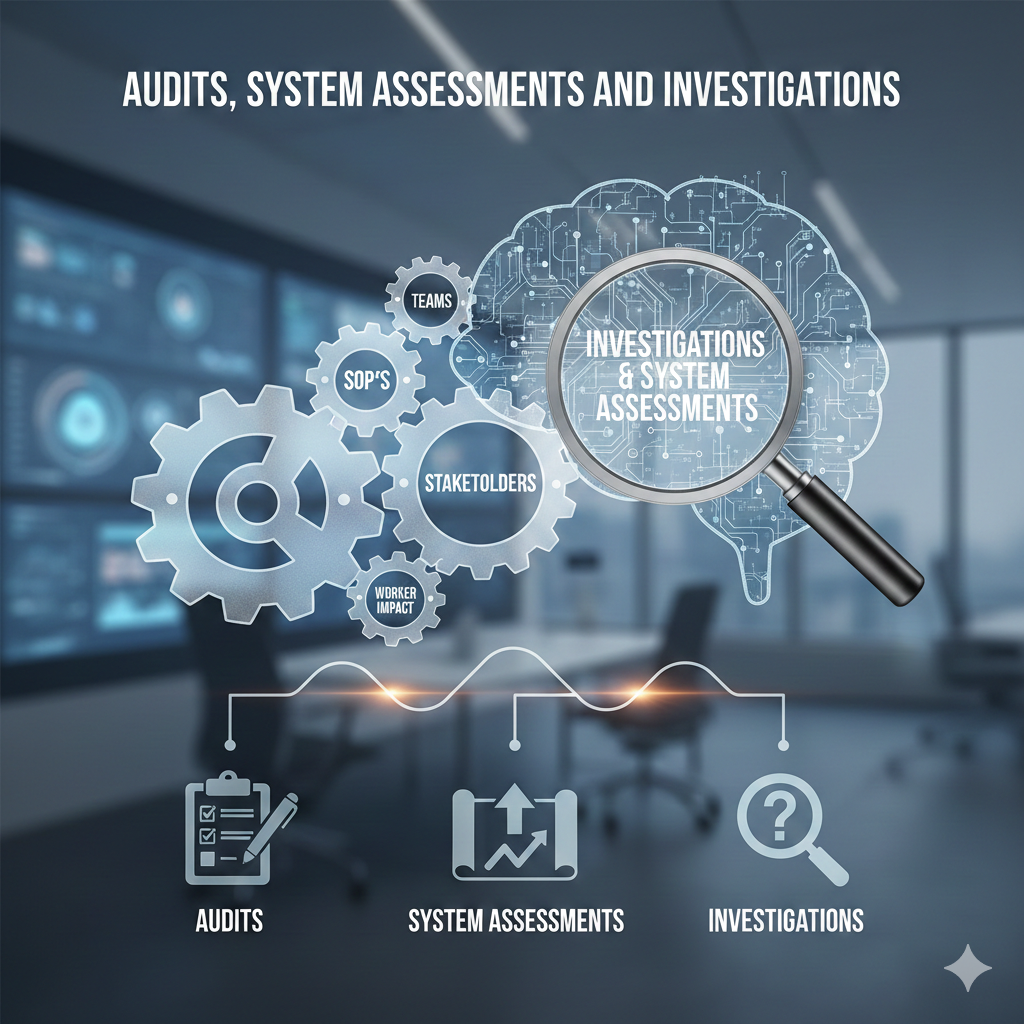
Under mandatory HRDD requirements, brands must identify and address human rights risks, Supplier self-reporting and internal reviews often fail to alert their customers in time. A suite of exercises such as 3rd party audits, systems assessment, validation, and investigations are deployed as per the need by the brands in line with the HRDD ‘identify and mitigate’ requirements. The traditional audits help uncover the risks to an extent while having its own limitations. There are times human rights incidents (not just limited to safety) occur or allegations are made, which requires specialised know-how in investigations. Here, systems assessment and investigations become an essential need, it uncovers information on sensitive issues, verifying system’s effectiveness, enables timely and compatible remediation, and demonstrates credible risk-based HRDD while protecting workers from harm and retaliation.
As supply chain complexity is surfacing, the brands are increasingly facing risks across its supply chain. Limited transparency from suppliers, on workplace human rights concerns and weak or non-functional grievance mechanisms heightened the risk of workers’ retaliation, unresolved issues and escalation to external environments. Also, as brands are operationalising their own ‘access to remedy’ measures under HRDD regulations, the next logical need is a technically sound, independent and objective assessment and investigation, particularly in sensitive cases involving potential rights violations.
iMentor has been supporting global brands by conducting credible, independent, and unbiased management system assessments, verifications and investigations using structured risk-based methodology, which goes beyond the benchmark audits process. It requires know-how on functioning of factory teams, dynamisms of unions, the processes of legal arbitration mechanisms.
One such recent case was where a female worker was failed by every escalatory mechanism including the external investigation agency. It was found that the bias against a female worker was deep in several layers including when the intentions some of the investigators appointed by the factory were correct. In this case a senior manager was involved in a verbal spat with a female worker for a product damage where the worker was not responsible. Due to the weaker capacity of the teams responsible for the grievance redressal, the issue was escalated to multiple levels and remained unresolved. On brand's request, iMentor team reviewed the records of the grievance procedure clubbed with interviews of the victim, accused, team members present on floor, and the investigators themselves. Using the collected information, iMentor recreated the scenario, highlighting weaknesses in the supplier’s grievance resolution process, where the teams went wrong, and also uncovered completely new information that changed the course of result and recommendations. In another case in Myanmar, iMentor uncovered the relationship dynamics of union representatives and factory teams with the arbitration body, and how the pull and push for vested interest missed out to support the worker.

iMentor Development Services is a responsible business consulting firm working on structural challenges in global supply chains through practical, ethical, and implementable solutions.
© Copyright 2026, All Rights Reserved by